
Analyzing Gitman 2001 in Financial Studies
This article provides an in-depth analysis of Gitman 2001 within the context of financial studies. Focused on the principles and methodologies outlined in this cornerstone work, the article explores its impact and relevance. Gitman 2001 remains a vital reference for understanding financial management's complexities, integrating theoretical foundations with practical applications.
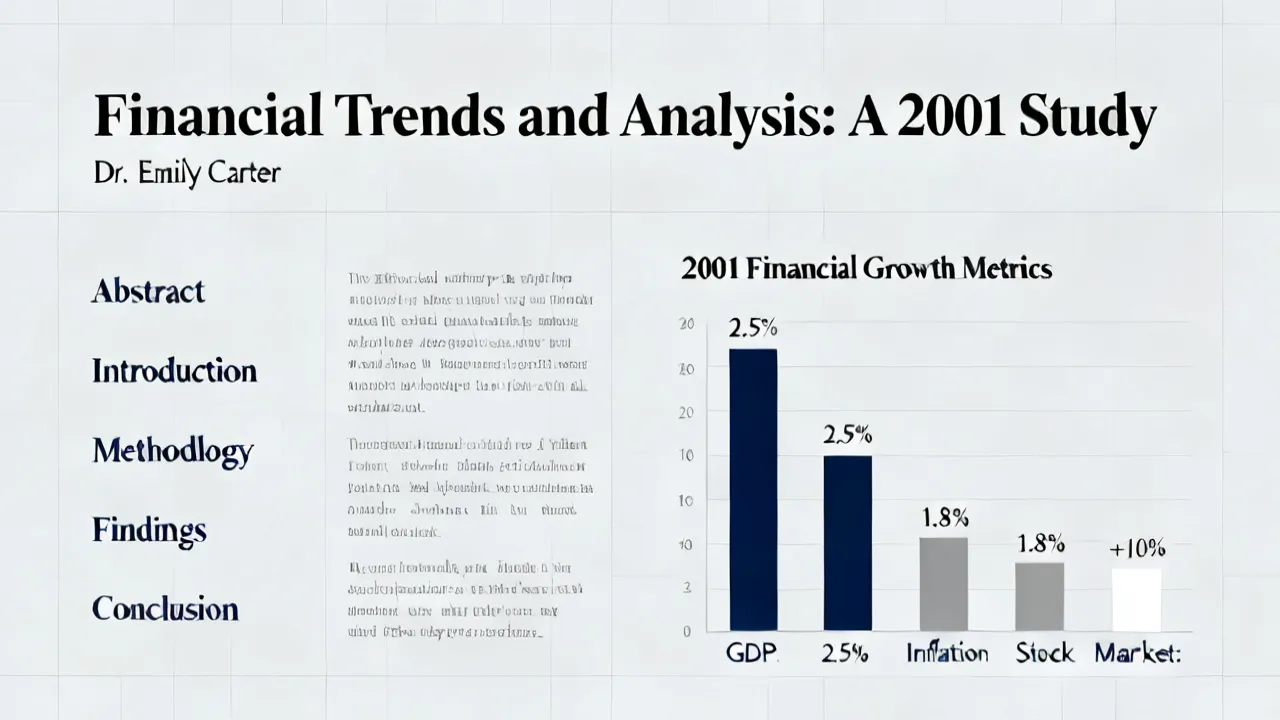
Introduction to Gitman 2001
Gitman 2001 is a pivotal piece of literature that aims to unravel the intricate dynamics of financial management. This foundational text by Lawrence J. Gitman is known for its comprehensive approach to financial principles, providing students and professionals alike with a robust framework for understanding the financial management process. The text addresses the multifaceted nature of finance, exploring both quantitative and qualitative aspects that influence decision-making processes in various contexts, and engaging readers with practical insights that are applicable across different financial scenarios.
Core Concepts in Gitman 2001
At the heart of Gitman 2001 are core concepts like the time value of money, risk and return analysis, and capital budgeting. These concepts serve as the foundation upon which financial decisions are made, emphasizing the importance of analyzing financial statements and understanding cash flows. By delving into the time value of money, Gitman elucidates how the value of money changes over time due to factors like inflation and opportunity costs. This principle is crucial in making informed investment decisions and understanding interest rates, which are foundational in both personal finance and corporate finance.
Moreover, risk and return analysis explores the relationship between the level of risk associated with an investment and the potential expected returns. Gitman effectively discusses various methods of assessing risk, enabling students and professionals to grasp how diversification can mitigate risk. He also introduces key metrics, such as the Sharpe ratio and beta, which help in evaluating the performance of securities and portfolios in varying market conditions.
Capital budgeting, another cornerstone of Gitman's work, revolves around the methods used to evaluate investment opportunities. The text covers essential techniques such as Net Present Value (NPV), Internal Rate of Return (IRR), and Payback Period analysis. Gitman provides insights into how these tools can guide organizations in making significant investment decisions that align with their strategic objectives, thereby ensuring effective allocation of resources.
Gitman uniquely presents these topics by integrating real-world applications with theoretical frameworks, making it an essential guide for budding finance students and seasoned professionals seeking to brush up on their knowledge. Through analytical case studies and examples, he illustrates how these principles can be applied to real-world situations, enhancing the reader's understanding and facilitating practical application in professional settings.
Impact and Relevance in Today's Financial World
Nearly two decades later, Gitman 2001 continues to hold considerable relevance within the finance industry. Its methods and principles are applicable in a wide array of financial decisions, from corporate finance structuring to individual investment portfolios. In an era where financial environments are constantly evolving, the ability to ground investment strategies in well-established principles is invaluable. The lessons from Gitman 2001 provide a solid foundation for individuals and organizations navigating complex financial landscapes.
Despite the evolution of financial markets, the core teachings remain pivotal in analyzing and interpreting financial statements, thus aiding decision-makers in developing refined strategies. As companies face unprecedented challenges and volatility—whether due to economic shifts, geopolitical tensions, or rapid technological advancements—the concepts presented in Gitman 2001 serve as vital tools. Financial professionals are tasked with making decisions that carry substantial implications for growth and sustainability; hence, a deep understanding of these foundational principles can lead to more informed and effective deliberations.
Comparative Analysis: Gitman 2001 vs. Modern Financial Texts
| Aspect | Gitman 2001 | Contemporary Texts |
|---|---|---|
| Methodology | Focus on fundamentals and foundational theories. | Integration of digital tools and advanced analytical models. |
| Application | Strong on theory with supportive real-world examples. | Emphasis on interactive and immersive learning techniques. |
| Relevance | Core finance principles remain timeless. | Rapid adaptation to current market trends and technologies. |
The traditional methodology employed by Gitman provides students with a strategic perspective on finance that modern texts may sometimes overlook due to their focus on technological integration. Contemporary texts often utilize advanced analytical models and digital tools to illustrate financial principles, which can be beneficial. However, understanding the foundational theories remains essential, as it allows students and practitioners to contextualize new tools and trends within broader financial frameworks.
Furthermore, Gitman’s emphasis on real-world applications ensures that students do not merely memorize financial principles but rather incorporate them into their analytical thinking. While the immersive learning techniques found in modern texts can foster engagement, the risk exists that they may overlook the necessity of a robust understanding of core theories that underpin financial decision-making. In essence, both types of texts serve their unique purposes; however, the enduring essence of Gitman's work provides readers with an invaluable skill set that can be adapted as the market evolves.
FAQs
- What makes Gitman 2001 significant in financial studies? Gitman 2001 is significant due to its thorough exploration of financial principles that underpin modern financial management practices. The book not only covers essential topics but also weaves together theory and practical application, making the concepts accessible and pertinent for a diverse audience.
- How does Gitman 2001 apply to current financial scenarios? Despite its age, Gitman 2001 provides a solid foundation in essential financial concepts that continue to apply to current economic analyses and strategies. Its teachings about risk management, investment valuation, and capital budgeting are critical in evaluating today's market situations, ensuring its relevance even in fast-changing environments.
- Can Gitman 2001 be used as a standalone text? While comprehensive, Gitman 2001 is often used alongside other modern texts and tools that highlight recent market trends and technological advancements. This combination enables a well-rounded understanding of both traditional financial principles and contemporary practices.
- Who should read Gitman 2001? Gitman 2001 is ideal for both undergraduate and graduate students in finance and business programs. Additionally, finance professionals seeking to enhance their foundational knowledge or those transitioning into finance from other disciplines will find Gitman's insights valuable and accessible.
- What are the key takeaways from Gitman 2001? Key takeaways include understanding the time value of money, mastering different risk assessment methods, and learning effective capital budgeting techniques. Additionally, the integration of theory with real-world case studies helps solidify the concepts presented.
The Evolution of Financial Management as Seen Through Gitman 2001
Understanding financial management requires a grasp of history as well as current trends. Gitman 2001 serves as both a historical account and a guide to navigating modern challenges. The evolution of financial management is characterized by several transformative periods, with the onset of globalization, technological advancements, and changing regulatory frameworks playing significant roles. Gitman's text captures these shifts while remaining anchored in the principles that have long guided financial practices.
The late 20th and early 21st centuries witnessed an explosion of technology that reshaped the financial landscape. Tools such as computer modeling, algorithmic trading, and advanced analytics have introduced new mechanisms for risk assessment and capital allocation. Gitman touches upon how these developments build upon foundational concepts, urging readers to recognize the balance between innovation and time-tested strategies.
Moreover, the rise of globalization has expanded the reach of financial management practices, leading to increased complexity regarding foreign investment, currency exchange risks, and cross-border mergers and acquisitions. Gitman discusses how understanding core financial principles simplifies these complex scenarios, thus providing a more fertile ground for sound decision-making amidst uncertainty. The ability to adapt established theories to new contexts is a skill that Gitman advocates, making his work exceptionally relevant in today’s interconnected financial ecosystems.
Case Studies: Application of Gitman’s Principles
To fully appreciate the depth of Gitman's teachings, it is beneficial to explore case studies that apply these principles to real-world scenarios. For instance, let us consider a hypothetical company, ABC Tech, which is evaluating a new project centered around cloud computing technologies. By employing the capital budgeting techniques detailed in Gitman 2001, ABC Tech can analyze potential cash flows, estimated costs, and risk factors related to the investment.
ABC Tech would first estimate the expected cash flows from the project over its lifespan, discounting these cash flows back to present value using an appropriate discount rate that reflects the firm’s weighted average cost of capital (WACC). Utilizing NPV analysis, if the present value of cash inflows exceeds the initial investment, then the project is deemed worthwhile. Additionally, calculating IRR would provide insight into the project's profitability, allowing decision-makers to ascertain whether the returns exceed the company's required rate of return.
Furthermore, risk assessment techniques, such as scenario analysis and sensitivity analysis, can be employed to evaluate how changes in key assumptions—like market demand or technology costs—may impact the project's outcomes. In each scenario, ABC Tech's management team can utilize Gitman's foundational principles to navigate uncertainties and develop strategic responses. Such case studies showcase the practical application of Gitman's teachings and underline their relevance in contemporary finance.
Conclusion: The Enduring Legacy of Gitman 2001
In conclusion, Gitman 2001 remains a monumental text in the landscape of financial education. Its comprehensive discussion of key financial principles combined with practical applications continues to furnish students and professionals with critical tools for success in their financial endeavors. As new methods and technologies emerge, the foundational concepts laid out in Gitman’s work remain a touchstone for informed decision-making in finance.
The legacy of Gitman will undoubtedly persevere as a vital resource for those pursuing knowledge in financial management. By bridging the gap between theoretical concepts and practical applications, Gitman equips readers with the skills necessary to thrive in an ever-evolving financial environment. As financial professionals cultivate their expertise, Gitman 2001 stands as a testament to the timeless nature of sound financial principles in navigating both today's challenges and tomorrow's opportunities.
-
1

Explore the Tranquil Bliss of Idyllic Rural Retreats
-
2
Unlock the Full Potential of Your RAM 1500: Master the Art of Efficient Towing!
-
3
Leveraging High-Interest CDs for Optimized Investment Returns
-
4
How to Take Advantage of Debt Consolidation Loans: Key Strategies
-
5
Understanding Debt Consolidation Loans: Weighing Advantages and Disadvantages