Understanding the MC34063 Chip
The MC34063 is an integral piece in the realm of power management, widely recognized for its versatility and efficiency in low-cost DC-DC converter applications. This article delves into the chip's specifications, functionality, and common use cases. It provides insights into why this chip remains a staple choice for engineers and hobbyists alike, discussing its various configurations and the benefits it offers.
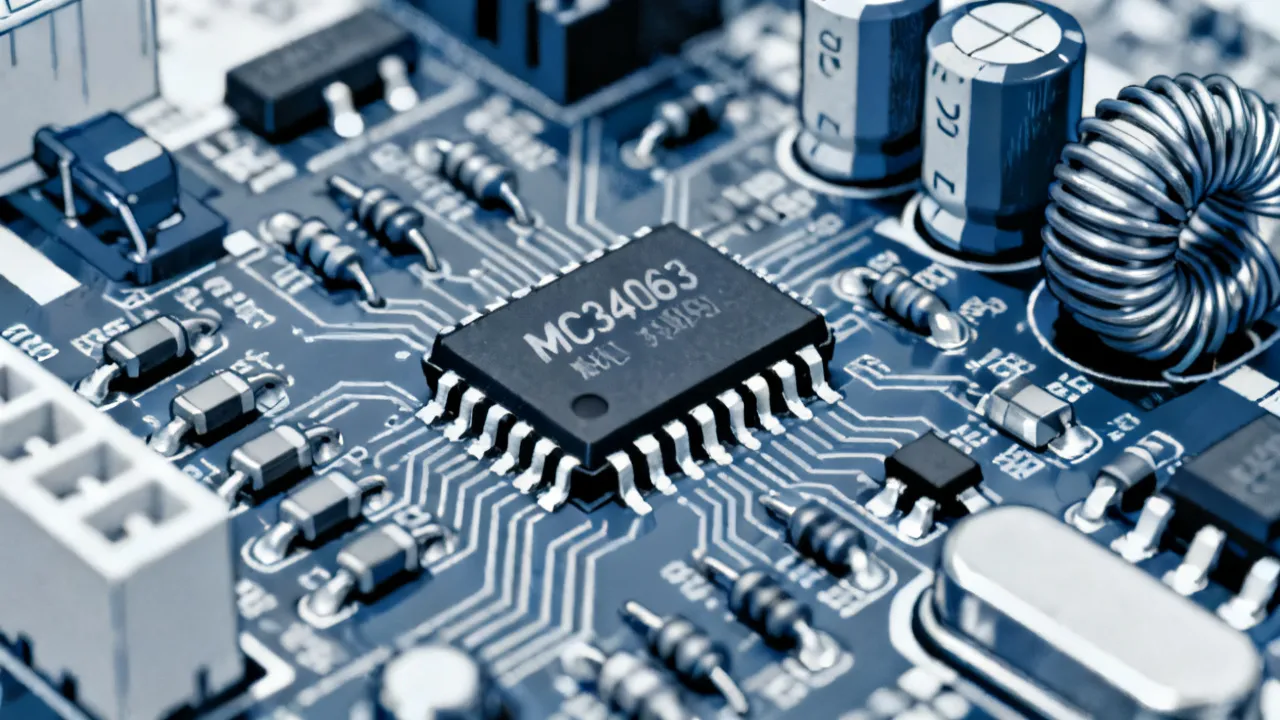
Introduction to the MC34063 Chip
The MC34063 chip is a popular component in power management applications, renowned for its adaptability, economical nature, and robust performance. Originally designed by Motorola, this DC-DC converter chip is utilized extensively across various industries, including consumer electronics, automotive systems, and telecommunications. As advancements in technology continue to evolve, the demand for efficient and reliable power electronics has surged, making chips like the MC34063 ever more relevant.
MC34063 Specifications and Features
The MC34063 chip is an integrated circuit used for DC-DC conversion. It is capable of stepping up (boosting), stepping down (buck), or inverting input voltage. Its main features include an adjustable output voltage ranging from 1.25V to 40V, a maximum switching current of 1.5A, and high efficiency. The chip functions within a wide input voltage range of 3V to 40V, making it suitable for multiple application scenarios, from small battery-operated devices to larger power supplies.
- Input Voltage Range: 3V to 40V
- Output Voltage: Adjustable from 1.25V to 40V
- Current Switching: Capable up to 1.5A
- Efficiency: Up to 85%
- Temperature Range: -40°C to 85°C
The MC34063 is available in variations like SMD and DIP packages, offering flexibility for different design purposes. Its integrated Vcc (voltage supply) terminal and the on-chip transistors for driving the inductors simplify the external circuitry necessary for configuration, making it a favored choice among engineers and hobbyists alike.
Applications of the MC34063
Due to its versatility, the MC34063 serves an integral role in numerous applications:
- Power Supplies: The chip aids in designing efficient, low-cost power supply units for both consumer and specialized applications. Its flexibility in voltage conversion allows it to be tailored for different electronic systems.
- Battery-Powered Devices: Serves as a battery voltage booster in mobile devices to ensure longer battery life and stability under varied usage conditions. By stepping up voltage efficiently, it helps maintain device performance with less frequent recharging.
- LED Drivers: Facilitates the stable operation of LED circuits by maintaining consistent voltage levels. This is particularly important in applications requiring reliable lighting, such as in automotive headlights and decorative lighting systems.
- Automotive Systems: Used in automotive circuits to manage power requirements effectively, especially in automotive lighting and infotainment systems. It handles voltage inconsistencies that can arise during vehicle operation.
- Telecommunications Equipment: The MC34063 finds its application in telecommunication devices where efficient voltage regulation is essential for performance and reliability.
- Battery Chargers: Implemented in simple battery charger circuits, particularly for NiMH and NiCd batteries, where it can adjust voltage levels depending on the battery's state of charge.
Step-by-Step Guide to Implementing the MC34063
Implementing the MC34063 chip requires understanding its configurations for different operational modes. Below is a basic guide encompassing essential steps in the design process:
| Step | Description |
|---|---|
| 1 | Determine the desired output voltage and current requirements for your application. This step ensures you understand the load that the circuit must handle. |
| 2 | Select the appropriate application mode (buck, boost, or inverter) based on your input and output voltage needs. Each mode determines how the MC34063 will manipulate the input voltage. |
| 3 | Consult the datasheet to configure resistors and capacitors for your specific mode. The output voltage can be set using a voltage divider made from resistors, and capacitors may be needed for stability and filtering. |
| 4 | Construct the external circuitry, including an inductor and diode, following the schematic for your chosen mode. Correct component selection is crucial for optimal performance. |
| 5 | Test the circuit under various load conditions to ensure that the output voltage and current meet specifications. This will help identify potential issues before deployment. |
Benefits and Limitations
The extensive use of the MC34063 chip is due to several advantages:
- Cost-Effective: The affordability of the MC34063 makes it a preferred choice for budget-sensitive applications. Its low cost does not come at the expense of reliability.
- Simplicity: The easy-to-configure nature, with minimal external components required, facilitates quick integration into projects. This is particularly advantageous for hobbyists and in prototyping phases.
- Versatility: Its capability to operate in buck, boost, and inverter modes caters to a broad spectrum of power management needs. This versatility allows designers to use the same component in different roles across applications.
- Small Size: The compact nature of the MC34063 allows it to fit into tighter spaces, making it suitable for portable and compact electronic devices where board real estate is limited.
- Integrated Features: With on-chip transistors and easy wiring, developers can save time in assembly and may avoid potential issues related to external component interaction.
However, designers should also note potential limitations, such as:
- Reduced Efficiency at High Loads: While it is efficient under normal operating conditions, its efficiency tends to decrease as the load approaches its maximum rated current.
- Lower Frequency Operation: The MC34063 operates optimally at lower frequencies. For high-frequency applications, other specialized ICs may be necessary to improve efficiency and performance.
- Thermal Management Considerations: Users must consider heat dissipation, particularly when operating at higher loads, to prevent thermal shutdown or operational failure, particularly in compact layouts.
- Output Ripple: The output ripple voltage may be higher compared to more sophisticated solutions, especially under high load conditions, which may necessitate additional filtering.
Comparison with Other DC-DC Converter Chips
While the MC34063 is a solid performer in the DC-DC conversion space, it’s valuable to compare it with other integrated circuits that serve similar purposes. For instance, chips like the LM2576 and LTC3780 are also popular choices within the same domain.
- LM2576: Unlike the MC34063, which offers versatility in modes, the LM2576 is primarily a step-down (buck) converter with higher current ratings of up to 3A, which makes it suitable for applications requiring higher power delivery.
- LTC3780: This chip provides a more advanced solution with features like synchronous operation, which can enhance efficiency significantly, especially in battery-powered applications. However, it comes at a higher price point and requires more complex PCB design considerations.
- Efficiency Trade-offs: Both alternatives may provide better efficiency than the MC34063 under specific conditions but may not match its versatility. The choice largely depends on the application; for example, if a simple, low-cost solution is necessary, the MC34063 remains unrivaled.
Future Trends and Innovations
As technology progresses, the landscape of power management solutions is constantly evolving. Research efforts are directed towards creating even more efficient and compact power management solutions. Innovations such as GaN (Gallium Nitride) and SiC (Silicon Carbide) technologies are being explored for their potential to produce higher efficiency and smaller footprint converters than their silicon counterparts.
The trend towards renewable energy systems and electric vehicles drives the demand for highly efficient DC-DC converters that can handle varying input sources and deliver stable outputs. Enhanced control algorithms and adaptive switching technologies will likely feature heavily in future designs, allowing for smarter operation that optimizes power usage.
There is also an increasing focus on integrating digital control features into traditional analog components, leading to intelligent power modules capable of communication with system controllers and dynamically adjusting to real-time conditions. This could greatly enhance the reliability and performance of circuits using chips like the MC34063 in future applications.
Conclusion
The MC34063 chip remains a pivotal tool for engineers seeking a versatile, cost-effective solution in power management circuits. Whether for simple hobby projects or more complex industrial applications, its adaptability and efficiency ensure continued relevance in the ever-evolving tech landscape. With its wide array of applications, from powering everyday gadgets to supporting specialized electronic devices, the MC34063 provides a reliable option in a designer's toolkit.
FAQs
- What types of tasks are top suited for the MC34063?
The MC34063 is ideal for low-to-mid level power application scenarios where efficiency and cost constraints are paramount. Its robust design can reliably handle various tasks within appropriate load margins. - Can the MC34063 handle high-frequency applications?
Generally, it operates optimally at lower frequencies. For high-frequency needs, other specialized ICs may be more appropriate due to their capability to minimize losses and support faster switching. - Is the MC34063 suitable for renewable energy systems?
While it can be used in simpler setups, more complex and efficient systems usually require advanced alternatives that better handle varying input conditions and maximize energy collection and usage. - What external components are typically needed?
In addition to the chip, you'll need a suitable inductor, diode, input and output capacitors, and resistors for voltage setting. Choosing the right components is crucial for optimal performance. - How can I improve the efficiency of my MC34063 circuit?
Improving efficiency can be addressed by carefully selecting high-quality inductors and low ESR (Equivalent Series Resistance) capacitors and minimizing circuit trace lengths to reduce resistance and losses.
-
1

Explore the Tranquil Bliss of Idyllic Rural Retreats
-
2
Unlock the Full Potential of Your RAM 1500: Master the Art of Efficient Towing!
-
3
Leveraging High-Interest CDs for Optimized Investment Returns
-
4
How to Take Advantage of Debt Consolidation Loans: Key Strategies
-
5
Understanding Debt Consolidation Loans: Weighing Advantages and Disadvantages