
Comprehensive Guide to MC34063 Usage
The MC34063, a monolithic control circuit, is extensively used in DC-DC converters due to its versatility and cost-effectiveness. This article delves into its capabilities, application methods, and the advantages it offers over similar integrated circuits, providing readers with valuable insights for electronic design and development projects.
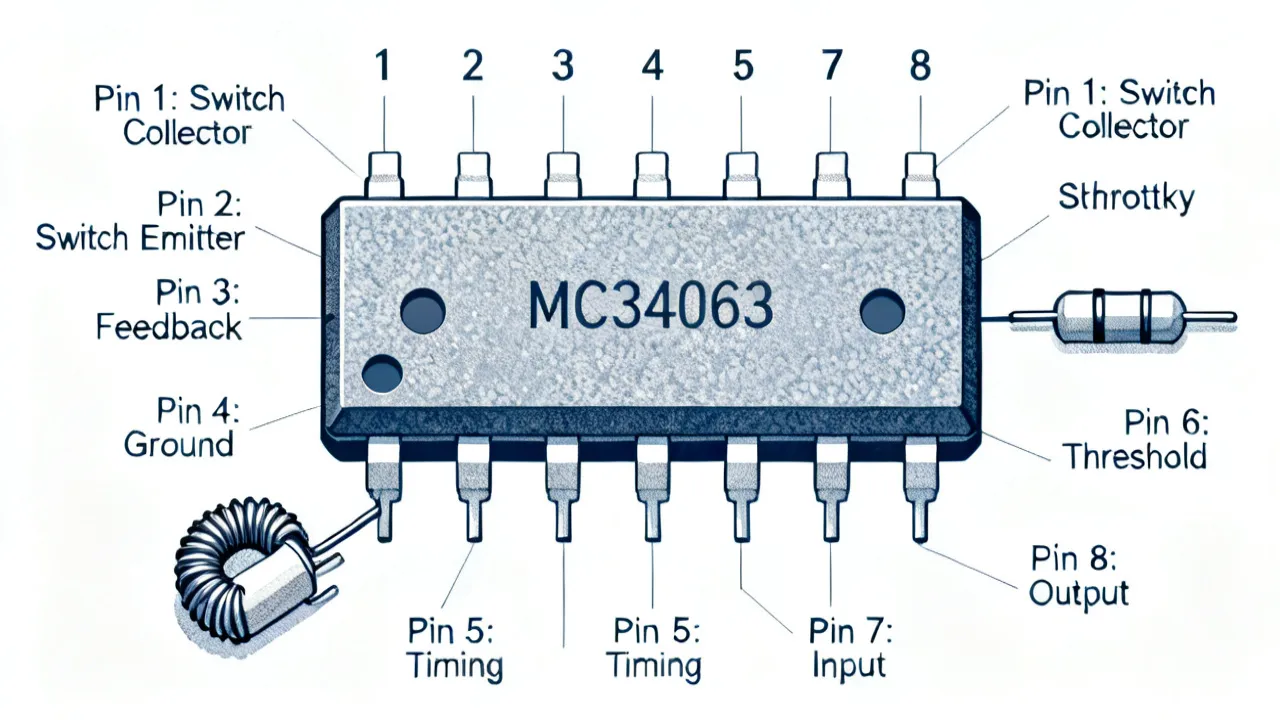
Understanding the MC34063 Integrated Circuit
The MC34063 is a versatile monolithic control circuit widely used in DC-DC converters, renowned for its cost-effectiveness and flexibility in various electronic applications. Originating from a time when the electronics industry sought robust and adaptable solutions, the MC34063 quickly became a favorite among engineers and designers for its ability to handle multiple circuit designs. This integrated circuit simplicity allows users to prototype and deploy applications quickly, ensuring that designs can evolve alongside technology.
Key Features of the MC34063
The MC34063 boasts an array of features that make it an industry staple. It supports step-up (boost), step-down (buck), and inverting configurations, making it highly adaptable. The circuit operates efficiently with an input voltage range from as low as 3V to as high as 40V, allowing it to meet the demands of various power supply designs. With a switching frequency adjustable up to 100kHz and an output switch current capacity at 1.5A, it strikes a balance between performance and affordability.
Additionally, the MC34063 integrates a voltage reference, error amplifier, and power switch, minimizing the need for external components and simplifying installation. The output voltage can be set to a desired level by configuring external resistors, making it suitable for applications that require precise voltage regulation.
Applications and Benefits
MC34063 finds applications in numerous domains, including power supplies for telecommunications equipment, battery chargers, and photovoltaic systems. Its high level of integration allows designers to benefit from reduced component count, leading to lower costs and a streamlined assembly process. Its ability to function as both a step-up and step-down converter in one package adds to its appeal in complex designs. Furthermore, its broad input voltage range enables it to work across various power sources, which is particularly beneficial in portable and renewable energy applications.
Another notable advantage is its thermal performance; the MC34063 can operate in environments with significant temperature variation without compromising reliability. This feature is particularly crucial in automotive electronics and industrial applications, where temperature extremes may be encountered. The efficiency of the MC34063 ripples through its low quiescent current, making it a prime choice for battery-operated devices wherein energy consumption is a key concern.
Comparison with Similar ICs
| Feature | MC34063 | LM2576 | LM2596 |
|---|---|---|---|
| Input Voltage Range | 3V to 40V | 4V to 40V | 4.5V to 40V |
| Switching Frequency | Up to 100kHz | 52kHz (fixed) | 150kHz (fixed) |
| Output Current | 1.5A | 3A | 3A |
| Configuration Options | Step-up, Step-down, Inverting | Step-down only | Step-down only |
When comparing the MC34063 to its contemporaries such as the LM2576 and LM2596, it's evident that while the MC34063 has a lower maximum output current of 1.5A compared to the 3A of the latter options, its versatility in configuration makes it ideal for specific applications where flexibility is paramount. The LM2596, with its higher switching frequency, is suitable for applications requiring faster response times but does not offer the inverting functionality that the MC34063 provides. Thus, the choice between these ICs largely depends on the project requirements, including desired output characteristics and operational constraints.
Designing with MC34063: A Step-by-Step Guide
When designing a circuit with the MC34063, understanding the nuances of its operation is essential. Observe the following guidelines for a successful implementation:
- Define Requirements: Begin by determining the input and output voltage and current requirements for your application. Specifically, consider the conditions under which the circuit will operate and the expected load variations.
- Choose Configuration: Select from step-up, step-down, or inverting configurations based on your output voltage needs. Be aware of the implications of each configuration on component selection and circuit layout.
- Calculate Component Values: Use the MC34063 datasheet formulas to determine the values of inductors, capacitors, and resistors. It is crucial to select components that not only fit the calculated values but also account for real-world tolerances and temperature characteristics.
- Layout Considerations: Ensure a compact layout to minimize lead lengths, which helps reduce noise and improve efficiency. As with many analog circuits, a well-designed PCB layout can significantly affect performance.
- Testing: Analyze the circuit under various load conditions to verify performance and make necessary adjustments. Implement tools like oscilloscopes and multimeters to analyze parameters such as voltage ripple and transient response during load changes.
This systematic approach facilitates a design that meets specifications while maintaining reliability. As the final step, it is recommended to simulate the circuit using software tools to refine the design before physical prototyping.
Component Selection for the MC34063
The performance of the MC34063 greatly hinges on the choice of external components. Let's delve deeper into the essential components and their selection criteria:
Inductor
The inductor serves as a critical component in the energy storage process during switching cycles. Selecting the right inductor involves several considerations:
- Inductance Value: The inductance value affects the output voltage ripple and the efficiency of energy transfer. Generally, higher inductance values result in lower ripple, thus improving output stability.
- Current Rating: Ensure that the inductor can handle peak currents without saturating or affecting performance. Peak current ratings should exceed the maximum output current plus an allowance for inductor ripple current.
- DC Resistance (DCR): Inductors with lower DCR provide higher efficiency by minimizing energy loss from heat generated during operation. Selecting high-quality inductors that balance size and performance is essential.
Capacitors
Capacitors used in the MC34063 circuit also play critical roles:
- Input and Output Capacitors: Both capacitors should have low equivalent series resistance (ESR) to minimize voltage ripple and enhance transient response. Depending on the application, electrolytic capacitors or ceramic capacitors may suffice.
- Voltage Rating: Always select capacitors whose voltage ratings exceed the expected maximum circuit voltages to avoid dielectric breakdown.
Resistors
The feedback resistors used to set the output voltage should also be accurately chosen:
- Resistance Values: Calculate resistance values based on the desired output voltage using the formulas provided in the MC34063 datasheet.
- Tolerance: Using resistors with tighter tolerance ratings ensures output voltage precision, which is pivotal for applications requiring strict voltage levels.
Practical Application Examples
For a more holistic understanding of the MC34063, let’s look at several practical applications where the IC shines, showcasing its adaptability:
1. Telecom Power Supplies
In telecommunications, the power supply must be reliable with minimal downtime. The versatility of the MC34063 allows designers to create step-down converters with precise voltage levels that power critical communication equipment, ensuring uninterrupted performance.
2. Battery-Operated Devices
Given its low quiescent current, the MC34063 is a prime choice for applications requiring battery-operated solutions. For example, in portable medical devices, the ability to step up the voltage to suit circuit needs while efficiently managing battery life is invaluable. This characteristic ensures extended operational periods between recharges, enhancing the user experience.
3. Solar Battery Chargers
In solar energy applications, where input voltage can fluctuate based on sunlight availability, the MC34063 excels by efficiently converting varying solar output to charge batteries effectively. Its ability to regulate voltage in both upward and downward directions allows for maximum energy capture and utilization, making it essential in renewable energy applications.
4. Automotive Applications
In automotive electronics, the MC34063's robustness against environmental extremes becomes advantageous. It can be deployed for powering sensors, LED lights, and control modules, adapting the vehicle’s supply voltage to suit various operational needs while maintaining system integrity during fluctuating engine loads.
Common Challenges and Troubleshooting
While working with the MC34063, designers may encounter some challenges. Here are some common issues and troubleshooting tips:
Voltage Ripple
If you experience excessive voltage ripple, consider the following:
- Check capacitor values: Ensure you are using capacitors with appropriate voltage ratings and low ESR.
- Inductor saturation: Verify that the inductor is not saturating during operation. A larger inductance may be necessary.
Thermal Issues
If the circuit heats excessively, check the following:
- Ensure adequate heat dissipation: Use heatsinks if necessary and ensure airflow is unobstructed.
- Verify switching frequency: A very high frequency may contribute to overheating; optimizing your design to work within a balanced frequency range may help.
Output Voltage Variability
If the output voltage fluctuates unexpectedly:
- Inspect feedback resistors: Ensure they are accurately rated and properly connected.
- Confirm layout practices: Long traces can introduce inductance and capacitance that can affect feedback and stability. Keep traces short and direct.
FAQs
- Q: What makes MC34063 suitable for solar power applications?
A: Its wide input voltage range and efficiency in DC-DC conversion make it ideal for harnessing variable solar input. Additionally, the IC’s ability to effectively charge batteries facilitates optimal energy storage for use when sunlight is low.
- Q: Can MC34063 be used for battery charging?
A: Yes, with appropriate circuit design, it can efficiently manage charging cycles for various battery types. The flexibility in output voltage regulation allows for precision in meeting specific battery charge requirements.
- Q: How does the MC34063 compare to more modern devices?
A: While newer ICs may offer higher efficiency and smaller sizes, the MC34063 remains a cost-effective solution for basic applications requiring flexible voltage conversion. Furthermore, its reliability and configuration versatility are unmatched for many legacy systems.
Recent Innovations and Future Outlook
As technology advances, so too does the landscape of power management solutions. Recent innovations in integrated circuits have aimed to enhance efficiency, reduce size, and improve thermal performance. However, the MC34063 continues to find its foothold in designs due to its simplicity and ease of use. Engineers often reach for it, particularly in educational settings or applications where cost and efficiency must be balanced.
Looking into the future, a potential area for growth involves developing “smart” MC34063 applications that incorporate microcontroller interfacing. This would allow for dynamic adjustment of output voltages based on real-time feedback, thus optimizing the energy management further. Furthermore, the push for improved performance in power converters will likely lead to new iterations of the MC34063 that incorporate modern features while maintaining the legacy of its original design.
Conclusion
The MC34063 continues to hold a prominent place in the electronics industry thanks to its versatility, simplicity, and cost-effectiveness. Despite the advent of newer technologies, its adaptability makes it a go-to solution for numerous applications, ensuring it remains relevant for today's electronics challenges. Engaging in thorough design and testing will maximize its potential across projects. As we embrace emerging trends in power electronics, understanding the MC34063's role in both current and future applications will be key to harnessing its capabilities effectively.
-
1

Explore the Tranquil Bliss of Idyllic Rural Retreats
-
2
Unlock the Full Potential of Your RAM 1500: Master the Art of Efficient Towing!
-
3
Leveraging High-Interest CDs for Optimized Investment Returns
-
4
How to Take Advantage of Debt Consolidation Loans: Key Strategies
-
5
Understanding Debt Consolidation Loans: Weighing Advantages and Disadvantages